Behind every good game is a good controller. The movement, the feel, and the memories made behind it make controllers a core, yet often overlooked, part of every gaming experience.
RELATED:Controllers That Are A Joy To Game With (& That Are A Nightmare)
A controller can transport players to a brand new world, giving them the freedom to explore their favorite games. Every controller brings something different to the table, be it a unique design or various features. Everyone has their favored controller and with so many to choose from, there’s a lot to like about each one of them. These official controllers each have something that makes them stand out, but which of them rank as the best of the bunch?
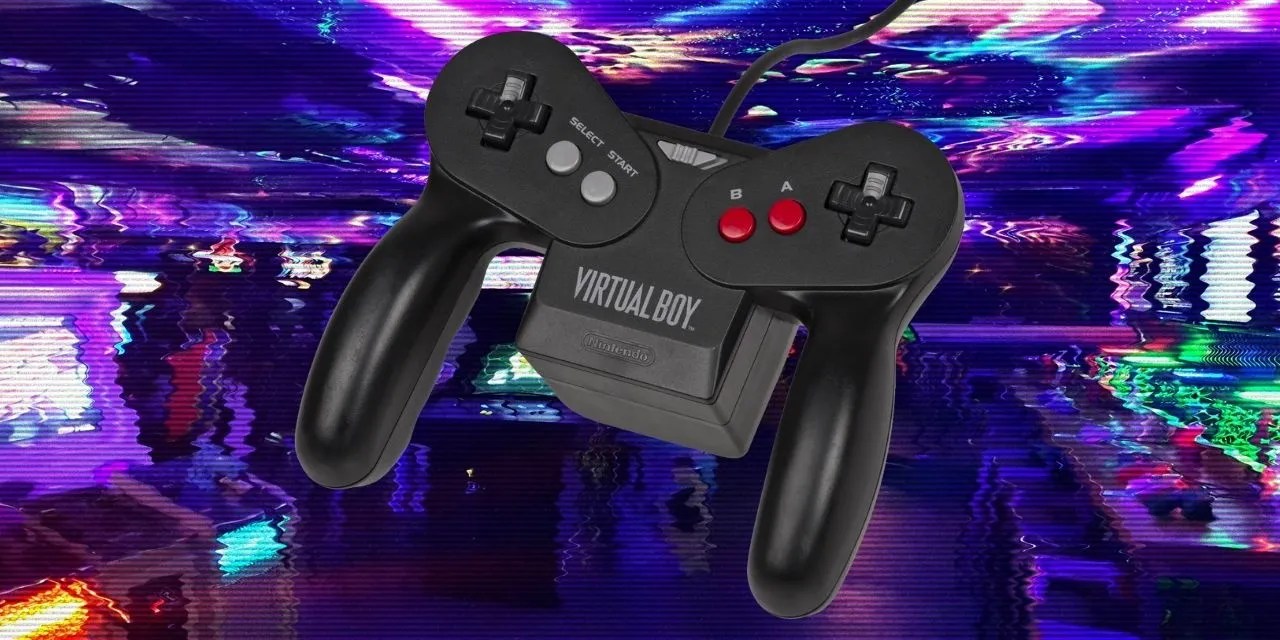
37Virtual Boy
The Virtual Boy controller marks a dark time inNintendocontroller design. Its directional pads' steep inward slope, battery-dependent power, and awkward shape led to a poor user experience. Not to mention, controlling a character in a 3D space with two D-Pads was just painful.
36SEGA Toylet
The SEGA Toylet is… Exactly what it sounds like. It’s an interactive urinal that worked with four games, controlled by the strength of flow and volume of urine. It could be found around public bathrooms in Tokyo. It was unique, but ultimately… It’s a toilet.
35Magnavox Odyssey
The first commercial home video game console, the Magnavox Odyssey, brought the arcade to the sofa in September 1972. The console came with two blocky controllers with a round dial on both sides which controlled horizontal and vertical movement. It was a strong foundation for the future of gaming consoles. However, understandably, it does not hold up to modern standards.
34Xbox controller
The Xbox controller, colloquially known as ‘The Duke’, is a strange thing. It has a wide setting that is uncomfortable to hold for extended periods of time, egg-shaped buttons that are frustrating to use, and, honestly, just isn’t nice to look at with that huge plastic Xbox logo taking up so much room.
RELATED:The Best Games On Xbox Game Pass (UPDATED)
The Duke was remade to be compatible with theXboxOne many years later. It did not improve.
33Vive Wand
When the HTC Vive was first released it came bundled with tracked motion controllers. This led many earlier adopters ofVirtual Realityto choose the Vive over competitors.
However, some fans felt the design was unusually uncomfortable to hold for extended periods of time. The second generation of HTC Vive controllers - the Knuckles Vive - solved this common problem. However, the negative feedback is enough to place these VR controllers low on this list.

32Google Stadia
The Google Stadia controller brings a new conversation to the table - a built-in Wi-Fi connection to reduce latency. With a gaming streaming service, this internal Wi-Fi connection is key to eliminating input lag. Furthermore, Google Assistant also provides in-game functionality such as walkthroughs. However, the high initial price and fairly low-quality build left gamers preferring the Xbox One or DualShock 4 controller.
31Atari CX40 joystick
Gamers have probably seen Atari’s iconic “Fuji” joystick logo but might not know that this controller is the inspiration. The Atari CX40 joystick was the first cross-platform game controller that was widely adopted by gamers.
Fans called the CX40 “the pinnacle of home entertainment controllers in its day”. On the other hand, whilst it was popular in 1977, the mechanical design flaws led to a breakdown.

30NES
This iconic rectangle controller had a simple, yet effective four-button layout: an ‘A’ and ‘B’ round button, a “START” button, and a “SELECT” button, and a cross-shaped joypad. The flat, pointed edges of the NES controller were fairly tough to hold comfortably, but easy for children to understand.
29Dreamcast
The SEGA Dreamcast controller was bundled with the SEGA Dreamcast. This console is credited for inventing analog triggers. Sadly the unusual design-led to poor critical reception. Edge even called it “an ugly evolution of Saturn’s 3D controller”.
28Power Glove
Yes, that’s right. The Power Glove wasn’t some kind of horrific, Thanos-esque nightmare. It was real. It just didn’t work. Whilst it was an officially licensed product, Nintendo was not involved in the design. Gesture-based controls would, eventually, be the backbone of one of Nintendo’s best controllers (spoilers). The Power Glove was ahead of its time in 1989 but failed to clear the bar.


