First-person shooters are one of the most popular genres around today. With seemingly dozens of FPS titles being released every year, it can feel as if the genre is starting to run out of ideas. Common trends have been used to death, yet there have been many examples of games that have changed the foundation of the genre itself.
RELATED:The 10 Hardest FPS Games Ever Made, Ranked
From titles that date back toDoomto more modern titles such asTitanfall, games come out every few years that set the bar ever so higher. Unfortunately, not every game can meet this bar and instead fail in a spectacular fashion. Ranging fromHalokillers toCall of Duty, here are some games that either changed the FPS genre or failed to innovate. Third-person games are excluded from this list.
10Changed The Genre: Call Of Duty 4: Modern Warfare
Call of Dutyhas dominated the FPS genre for well over a decade. It started as a modest competitor toMedal of HonoruntilCall of Duty 4: Modern Warfarechanged everything.
Both the single-player and multiplayer portions lead to many changes in the genre. The campaign was praised for its great use of setpieces that kept the game action-packed throughout its runtime.Call of Duty4’s multiplayer was the true game-changer, however, incorporating RPG elements such as experience pointsand perksthat could be used in custom loadouts. Most FPS titles abandoned competitive ranks entirely in place ofCoD 4’sprogression system.

9Failed To Innovate: Aliens: Colonial Marines
Aliens: Colonial Marinesis a perfect example ofmisleading advertising.Aliensfans were led to believe this game had sophisticated AI, a plot that would expand on what the movies established, and a general degree of polish that would be completely absent in the final product.
Reviewers and fans alike were dumbfounded at the game’s plethora of bugs and missing elements present in various demos shown before the game’s release. It’s a shame considering how promising the game looked in pre-release footage.

8Changed The Genre: Halo: Combat Evolved
Virtually everyone acclimated with video games knows of theHalofranchise. The first game completely redefined console shooters, the second redefined multiplayer experiences, and the third title put major emphasis on community tools and custom games. Even ifHalo 2andHalo 3made radical shifts in the genre, they wouldn’t exist if not forHalo: Combat Evolve’ssolid foundation.
RELATED:The 10 Best Exclusives On The Original Xbox, Ranked
Firing a gun inHalois as satisfying now as it was in 2001. Weapons make great use of aim assist that, when coupled with the game’s great control scheme, give every weapon personality and weight.Halo’sgunplay also takes full advantage of great AI that will dodge out of bullets, flank the player, or react to having their leader killed. These things combine with the unique soundtrack and excellent score to make one of the most influential shooters ever made.
7Failed To Innovate: Haze
PlayStation 3users might have hadResistanceandKillzone, but they didn’t have a franchise quite likeMicrosoft’sHalo.Free Radical’sHazewas supposed to be a competitor toHalobut was plagued with development issues.
Hazewas nothing more than a generic military shooter with a dull color palette and uninspired levels. The narrative showed promise with its premise of soldiers getting addicted to a battle-enhancing drug named “Nectar,” but it never heads anywhere interesting. Instead, playersspend a short afternoonblasting generic soldiers before the credits roll.

6Changed The Genre: Goldeneye 007
There was a time in first-person shooters when the ability to look up was rare. Not only did Rare’sGoldeneye 007manage to incorporate much more user control in every gunfight, but it also set the foundation forsplit-screen co-op, competitive multiplayer, anN64speedrunning community, and a shift away from keycard mazes for levels to name a few.
Its gunplay and mission design still hold up today. Saying this game was a major genre innovator would be a massive understatement.

5Failed To Innovate: Daikatana
John Romero, one of the developers behindDoom,Wolfenstein,andQuake, decided to split fromid Softwareto make his own studio that would be devoid of publisher meddling. This studio would be named Ion Storm, and their first game would be the disappointingDaikatana. Overambition was the main culprit for this game’s negative reception. Numerous delays meant thatDaikatana’s potentially innovative ideas were old news once the game released.
Daikatana’s promises of having great AI and friendly companions were met with buggy AI that would frequently break alongside graphics that looked years behind the curve. Most of the game’s issues can be attributed to Ion’s constant rotating of staff and careless attitude during development. Red flags were even apparent with the game’scontroversial marketing. Needless to say, it was a bad look for a newly found studio.

4Changed The Genre: Half-Life
Cinematic setpieces and thousands of lines of dialogue seem commonplace in shooters today. That wasn’t always the case. BeforeHalf-Lifewas released, most shooters were about killing everything in a level and stopping a maniacally evil antagonist.
RELATED:10 Cancelled Xbox One Games You Forgot Existed
Half-Lifeput this genre trope on its head by making the player a named protagonist that impacted the story. Players control Gordan Freeman, a scientist that accidentally creates the largest work accident known to man. A reliance on dialogue in-game with no cutscenes was revolutionary at the time and copied to death since. The game also sported fantastic AI that would go on to influence other shooters as well.
3Failed To Innovate: Fallout 76
Fallout 76might be one of the most disastrous video games ever released. SomeFalloutfans were excited at the game’s promise of being a multiplayerFalloutgamewith quests and PvP, but the game released in such a poor state that it has near single-handedly ruinedBethesda’sreputation as a game developer.
This game didn’t function well at launch. Animations would stop playing, god rays would pierce the ground itself, quests would frequently break, and some players couldn’t even play the game at all. Frequent server crashes meant the game was always prone to stop working altogether. This isn’t even including issues outside of the game such as the collector’s edition canvas bag or the Nuka Dark Rum controversies. A multiplayerFalloutgame could have brought in thousands of new fans to the franchise, but Bethesda instead cashed in their goodwill with one of the most disappointing video games of all time.

2Changed The Genre: Doom
Before first-person shooter was a commonly-used term, players would take to calling games “Doomclones.” This is becauseDoomeffectively kickstarted the FPS genre.Wolfenstein 3Dand evenMaze Warindeed founded the genre, but it wasDoomthat took the foundations of the genre and molded them intoa phenomenal shooterthat mastered the art of incorporating exploration with high-octane gunplay.
If it wasn’t for this game’s existence, the FPS genre wouldn’t be where it is today.

1Failed To Innovate: Duke Nukem Forever
It took 14 years forDuke Nukem Foreverto release since it was first announced back in 1997. This sequel toDuke Nukem 3Dwas to have a much larger scope than any game for its time. Major levels and a wide range of new enemies were just the tip of the iceberg for what was promised.
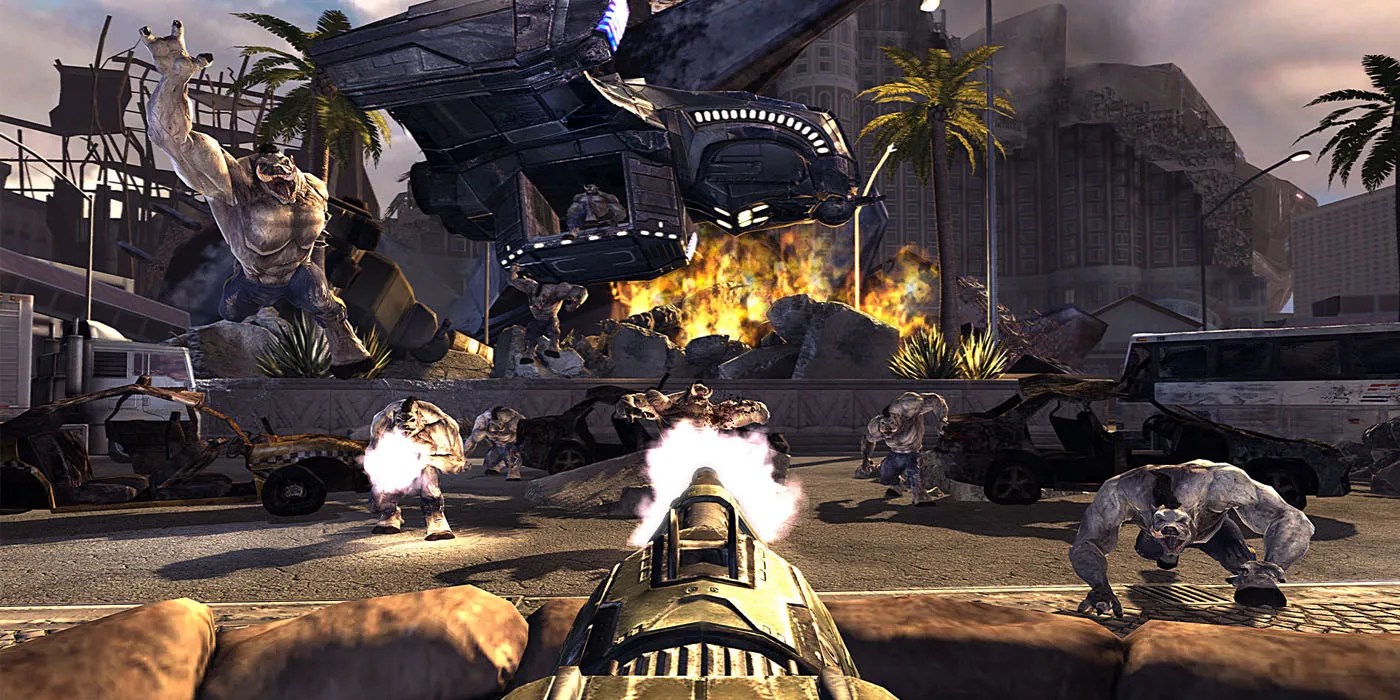
Instead of being canceled, this gameshambled through developmenthell for over a decade and swapped hands between 4 development studios.Gearbox Softwarewould eventually finish the game. Dated is the best way to describeForever. This game was an entire console generation behind what its competition was providing. A massiveDuke Nukemgame with large levels and many interactive elements would have made for a potential game-changer in the FPS genre, but it instead gave developers a perfect checklist on how not to make a video game.